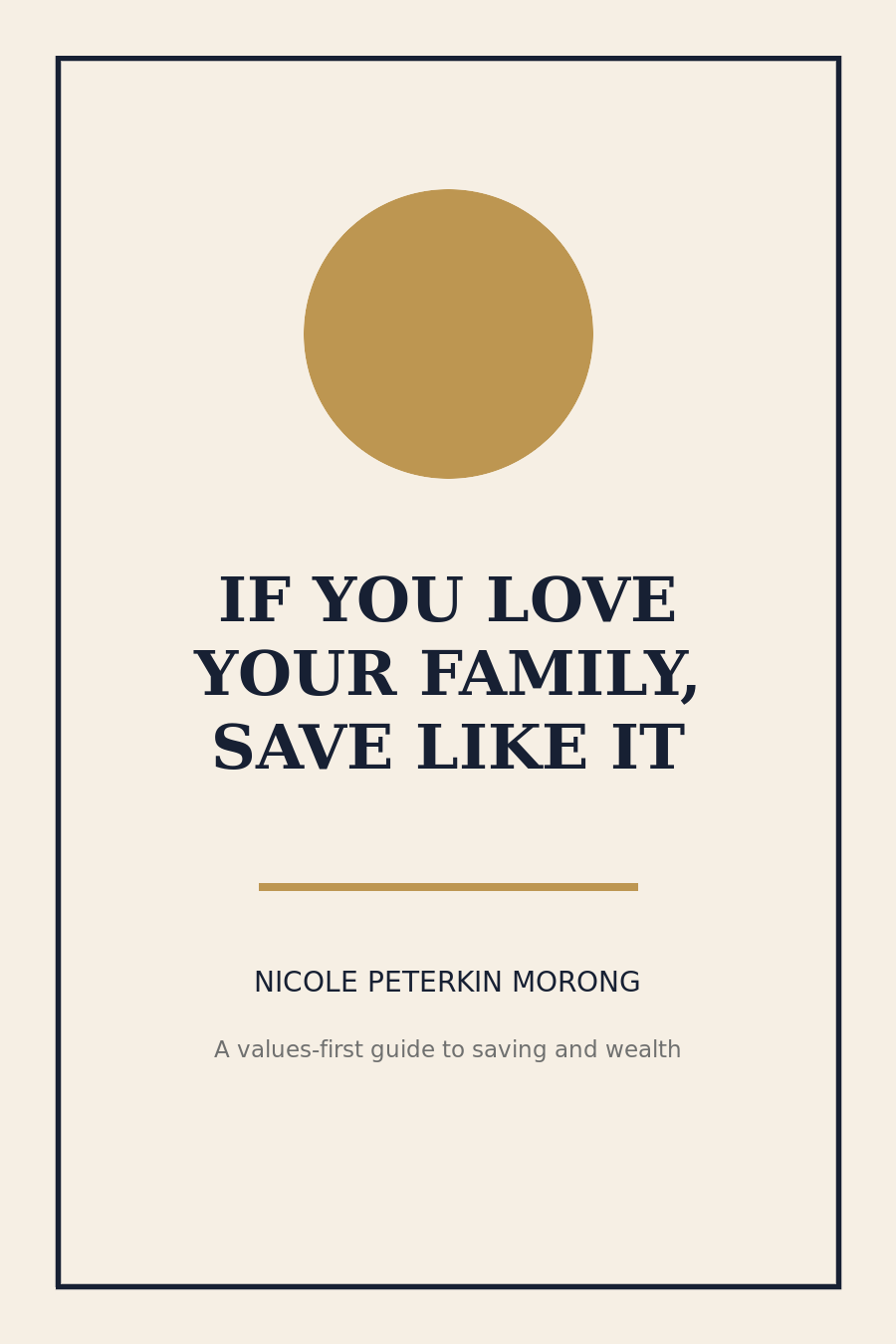
Money management for modern America, with a much more human tone.
The jacket promise is clear: imagine knowing when your financial goals will be achieved, imagine building wealth without guilt about how you spend the rest of your money, and imagine working less hard at the money game while having more to show for it.
The book asks readers to connect financial decisions with the life they want. The Scorecard applies a similar standard to an advisor relationship: whether the advice creates clarity and supports better decisions.
Instead of shame-based budgeting or abstract market talk, the material centers on real households, real tradeoffs, and practical structure.
What the book promises
- Imagine knowing for certain when and how your financial goals will be achieved.
- Imagine having a plan to build true wealth without feeling guilty about how you spend the rest of your money.
- Imagine being able to work less hard at the money game while having more to show for it.
Why Nicky wrote it
The origin story on the jacket is strong and personal: she watched her father do the “right” things and still miss the kind of lifestyle his income should have supported. The point of the book is not extreme frugality. It is helping people use structure, intention, and better decisions so money actually supports the life they want.
Planning should fit your life
The book pushes against rigid financial advice that ignores how real families and real business owners actually live.
Resources need a strategy
Money needs a job. Income alone is not enough without a plan for what each dollar is supposed to do.
Freedom is the point
The end goal is not perfect behavior. It is more peace, more options, and more alignment between money and family life.
What other readers noticed
“Save like it!”Judy Robinett’s jacket blurb praises the book’s practical advice for parents navigating overspending and credit.
“Crucial advice in an easy-to-read, engaging style.”Ken Dunn’s endorsement points to the book’s accessible, plain-language approach.
“Mandatory reading for every new parent.”Nicholas Boothman’s blurb reinforces the family-first framing at the center of the book.
How it connects to the scorecard
The book is the philosophy. The Advisor Scorecard is the pressure test: it asks whether your current advisor relationship is helping money create clarity and a better life. Continue with the guide to building flexible portfolio income and the framework for connecting business cash flow with personal goals.
Take the Advisor Scorecard
See whether your current advisor is helping you build the kind of life the book is pointing toward.
Create Your Financial Snapshot
Move from philosophy into actual numbers before speaking with a financial professional.
Planning Perspectives
Read the ongoing themes that echo the book’s voice in a more current, evergreen format.
Turn the book into an actual planning conversation.
The Financial Snapshot organizes the numbers, tradeoffs, and opportunities behind your real life before a planning conversation.
Related reading
Learn more about Nicky Morong and her planning approach.
The Hidden Cost of a 1% Financial Advisor
The flagship fee guide: what 1% can cost at $1M, $2M, $5M, and $10M, and what business owners should expect in return.
Business Owner Cash Flow Planning
How to build a plan around real-life tradeoffs, not spreadsheet perfection.
Values-Aligned Wealth
The clearest article version of the book’s family-first planning philosophy.